Trending
This story is from April 16, 2008
Gold regains lost glitter
Gold is gorgeous and gold is back in a svelte new look for daily wear.

doweshowbellyad=0;  Gold is back in vogueA year back platinum and silver were quite the rage, but gold is in vogue once again. Indiatimes explores the charisma of the precious yellow metal...
Gold since ages has adorned kings and queens, nobility, brides and grooms, and even gods and goddesses across India. It is said to be an auspicious offering to the gods and brides are traditionally welcomed to their new homes with a gift of gold.
No auspicious ceremony - be it the birth of a child, a marriage, an eighteenth birthday, a festival or a special celebration - is complete without it. The metal, said to be the seed of ‘Agni’, the God of Fire is also known to possess medicinal properties. Little wonder that gold continues to be a favourite with millions across the country.
Today, gold is sought for reasons beyond investment and traditionalism. Gold is no longer carefully locked inside only to be brought out on special pujas or a big fat wedding. Gold is now allowed to spread its sheen and sparkle every day.
According to figures released by World Gold Council (WGC), global demand for gold in mid 2007 touched a record of $14.5 billion mark, 37 per cent more than the corresponding period of 2006. The trend of gold prices in India in the last few years reveals that the yellow metal has appreciated 95-fold. Even after seeing a marginal decline in its value in June 2007, gold is still a benchmark in jewellery fashion. This resurgence in the demand for gold and the desire for more wearable and lightweight designs has forced many jewellery houses like Tanishq to launch daily wear gold jewellery.
“Indian gold jewellery is clearly the flavor of choice for ladies as well as young girls now. Since Tanishq’s ‘Everyday’ collection for gold has been inspired by two major categories of buyers- traditional and modern, we have been able to revive both,” says Prashant.
The availability of sleeker and hipper gold jewellery has also helped to break away from the mindset that gold is only meant for older women. You don’t have to be in your 40’s or 50’s to wear gold. “When I was young I used to think that only old people wear gold. But gold is not just for oldies. Gold has an understated style and I love wearing gold. I have been collecting lots of gold since I got married. Gold has also become more youth-oriented. Now gold blends with all kinds of fashion and style. It’s not only about saris, it even goes with westerns,” says model Amanpreet Wahi.
Besides remoulding itself to a trendier avatar, traditional designs have also been reworked to suit modern tastes.
“Traditional styles of hand-made jewellery that are unique to the region like Rajasthan are in vogue - precious and semi-precious stones set in gold (kundan work), coloured enamel painting on gold (meenakari work) especially with a traditional ‘peacock’ pattern and gold filigree on coloured glass (thewa work),” says Prashant.
Women from all walks of life - housewives, models, designers, students and even corporate women are turning to gold. Alpna Gujral who made her foray in jewellery design couple of years ago says, “Women are completely driven by gold. Gold makes an Indian woman look far more dressed up and is casting its spell even internationally.”
If you are also touched with yellow fever or you are a woman who loves flaunting her precious assets, then it’s time glam up yourself with gold. As they say old is always gold; millions of women and men in India still love their gold. Despite numerous attempts by the fashion mafia to sideline the metal, it has succeeded in regaining its lost glitter.
neelam.bansal@indiatimes.co.in
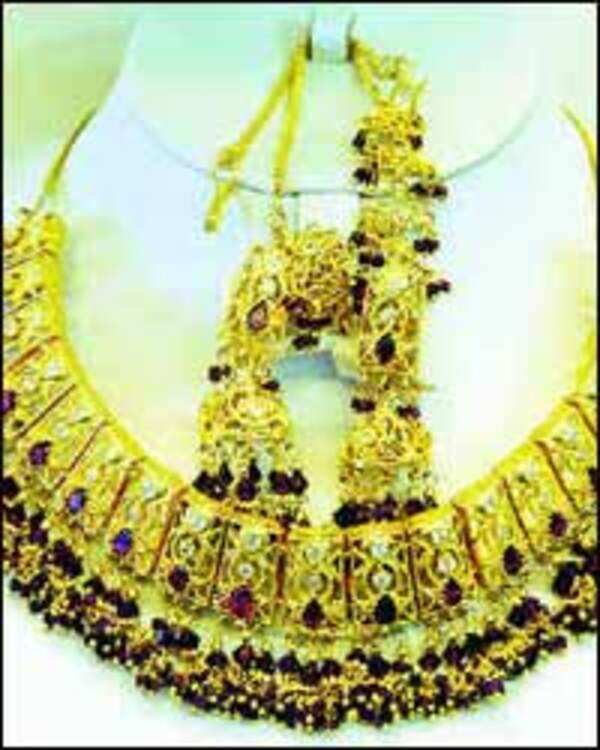
Gold since ages has adorned kings and queens, nobility, brides and grooms, and even gods and goddesses across India. It is said to be an auspicious offering to the gods and brides are traditionally welcomed to their new homes with a gift of gold.
No auspicious ceremony - be it the birth of a child, a marriage, an eighteenth birthday, a festival or a special celebration - is complete without it. The metal, said to be the seed of ‘Agni’, the God of Fire is also known to possess medicinal properties. Little wonder that gold continues to be a favourite with millions across the country.
Today, gold is sought for reasons beyond investment and traditionalism. Gold is no longer carefully locked inside only to be brought out on special pujas or a big fat wedding. Gold is now allowed to spread its sheen and sparkle every day.
Though a year back platinum and silver were quite the rage, gold is in vogue once again. In fact, the onset of the marriage and festival season in India has seen a surge in gold prices. According to regional business executive for Tanishq, Prashant, “Gold prices are going up and though other metals are gaining popularity that has not made much difference to the gold market. Going by market trends and bridal choice gold is still a preferred metal. It’s just that the taste for designs has changed.”
According to figures released by World Gold Council (WGC), global demand for gold in mid 2007 touched a record of $14.5 billion mark, 37 per cent more than the corresponding period of 2006. The trend of gold prices in India in the last few years reveals that the yellow metal has appreciated 95-fold. Even after seeing a marginal decline in its value in June 2007, gold is still a benchmark in jewellery fashion. This resurgence in the demand for gold and the desire for more wearable and lightweight designs has forced many jewellery houses like Tanishq to launch daily wear gold jewellery.
“Indian gold jewellery is clearly the flavor of choice for ladies as well as young girls now. Since Tanishq’s ‘Everyday’ collection for gold has been inspired by two major categories of buyers- traditional and modern, we have been able to revive both,” says Prashant.
The availability of sleeker and hipper gold jewellery has also helped to break away from the mindset that gold is only meant for older women. You don’t have to be in your 40’s or 50’s to wear gold. “When I was young I used to think that only old people wear gold. But gold is not just for oldies. Gold has an understated style and I love wearing gold. I have been collecting lots of gold since I got married. Gold has also become more youth-oriented. Now gold blends with all kinds of fashion and style. It’s not only about saris, it even goes with westerns,” says model Amanpreet Wahi.
Besides remoulding itself to a trendier avatar, traditional designs have also been reworked to suit modern tastes.
“Traditional styles of hand-made jewellery that are unique to the region like Rajasthan are in vogue - precious and semi-precious stones set in gold (kundan work), coloured enamel painting on gold (meenakari work) especially with a traditional ‘peacock’ pattern and gold filigree on coloured glass (thewa work),” says Prashant.
Women from all walks of life - housewives, models, designers, students and even corporate women are turning to gold. Alpna Gujral who made her foray in jewellery design couple of years ago says, “Women are completely driven by gold. Gold makes an Indian woman look far more dressed up and is casting its spell even internationally.”
If you are also touched with yellow fever or you are a woman who loves flaunting her precious assets, then it’s time glam up yourself with gold. As they say old is always gold; millions of women and men in India still love their gold. Despite numerous attempts by the fashion mafia to sideline the metal, it has succeeded in regaining its lost glitter.
neelam.bansal@indiatimes.co.in
End of Article
FOLLOW US ON SOCIAL MEDIA
Visual Stories






Photostories
Featured In Lifestyle
MORE FROM ETIMES
life & stylePopular Categories
Entertainment NewsBollywood NewsTollywood NewsKollywood NewsMollywood NewsMovie ReviewsLatest Hindi MoviesLatest Tamil MoviesMX PlayerParenting TipsHome RemediesWeight LossBeauty TipsParenting TipsHindi VideosHindi Video SongsBhojpuri Music VideosLatest Telugu MoviesBhojpuri Music VideoHindi TV News
Trending in Entertainment
Latest MoviesBollywood MoviesHollywood MoviesTamil Movies 2024Telugu Movies 2024Malayalam Movies 2024Kannada Movies 2024Marathi Movies 2024Bengali Movies 2024Top Rated Movies 2024Best Hindi MoviesBest English MoviesBest Telugu MoviesBest Tamil MoviesBest Malayalam MoviesBest Kannada MoviesBest Bengali MoviesUpcoming Hindi MoviesBest Movies Of All TimeBest Hindi Movies of All Time
Trending in Etimes
Horoscope TodayNumerology Predictions TodayKamala HarrisRobert F Kennedy JrBarron TrumpElon MuskAnna Paulina LunaJustin TrudeauTrump Town Hall Key TakeawaysInternational Day of PeaceDonald TrumpSNL 50 SeasonKamala HarrisSituationship TipsUsha UthupRelationship TipsSean Diddy CombsMiley CyrusJennifer Lopez
Trending in TV
Trending in Lifestyle
Trending in Regional
Movie Reviews
Berlin ReviewThe Buckingham Murders ReviewSpeak No Evil ReviewVisfot ReviewThalapathy Is The G.O.A.T ReviewRebel Ridge ReviewDetective Conan vs. Kid the Phantom Thief ReviewBeetlejuice Beetlejuice ReviewPad Gaye Pange ReviewA Wedding Story ReviewThe Diary Of West Bengal ReviewTikdam ReviewKinds Of Kindness ReviewAfraid Review
Upcoming Hindi Movies
Upcoming Regional Movies
Latest News
SoftBank’s latest investment signals Masa’s brand-new India strategyEvery single infiltrator will be thrown from here, need to protect tribal culture: Amit Shah in JharkhandHenry Danger: Here’s where you can see all seasons - 1 to 5Former Rapper Shyne barrow speaks about Diddy's arrest, says he "Killed" his lifeWhat happens if we see God in DreamsCon artist held for posing as customs inspector in SuratKaun Banega Crorepati 16: Amitabh Bachchan reminisces about shooting for Deewar and Kabhi Kabhie; says “Kabhi Kabhie josh mein hum log bohot kuch kar dete hain"Allu Aravind on Bollywood filmmakers having limited perspectives in their films: 'They are locked between Bandra and Juhu'Mafia ran govt in Samajwadi Party rule while 'babua' slept: Yogi AdityanathThe Interplay of Sun Signs and Numerology: Unlocking Your Ultimate PotentialHow Israel built a modern-day Trojan Horse: Exploding pagersPM Modi must take to task those abusing Rahul, says CongressGarena Free Fire MAX redeem codes for September 20: Win free in-game rewards dailyOnePlus 12 is available for Rs 35,314 only on Amazon; check exchange deal and bank offersHow to watch 'Fast and Furious' movies in chronological order and release datesBack support for chair: Top picks onlineAnna Sebastian Perayil’s death: EY Chairman Rajiv Memani says, ‘I truly regret…’'If they don't listen ...': Amit Shah's stern warning to Maoists
Other Group Sites -
ETimes is an Entertainment, TV & Lifestyle industrys promotional website and carries advertorials and native advertising.